
Mingo County Court Record Requests
Take the request straight to the right office. The Mingo County Circuit Clerk holds Circuit Court files. It also keeps the public side of Family Court cases. The Magistrate Court Clerk keeps magistrate civil, criminal, and traffic records. Probate, wills, deeds, and county commission papers live with the County Clerk. That division decides where a docket search, inspection, or copy request lands.
Use every channel that is documented. WVPASS covers Circuit cases; MCRSearch covers magistrate cases. Stop at the clerk's counter or ask about a public terminal. A phone call first can locate the file. It can also confirm current mail instructions. A written request can follow once the office states its address, payment method, and delivery terms. The clerk posts no single Mingo email form or turnaround promise. West Virginia law also permits a records request. Direct it to the clerk who keeps the court record.
- Find the case number through an official search, notice, citation, or clerk call.
- Identify the exact docket sheet, motion, order, judgment, exhibit, or paper needed.
- Contact the Circuit, Family, Magistrate, municipal, or County Clerk that holds it.
- Choose inspection, electronic delivery, plain paper, certified copy, or archive retrieval.
- Confirm page count, fees, postage, payment, and timing before sending funds.
Three Mingo Court Record Layers
Three layers, three purposes. A docket is the chronological index. It may show a motion filed or an order entered without telling you more. The document holds the actual text behind that entry. A certified copy is a clerk-authenticated version of one chosen paper. Searching the docket is usually the first step, not the whole request.
| Record layer | What it provides | Best source |
|---|---|---|
| Docket | Case number, events, settings, parties, and disposition | WVPASS, MCRSearch, or clerk |
| Filed document | Pleading, motion, order, or judgment text | WVPASS where available or clerk |
| Certified copy | Clerk-authenticated copy for formal use | Custodian of the original file |
MCRSearch supplies case information, not document images. WVPASS can open public Circuit documents. Both stay informational; a certified record comes from the clerk.
Kinds of Court Records
Each court in Mingo County keeps its own kind of file. Circuit jackets can hold felony, major civil, juvenile, abuse-and-neglect, and lower-court appeal material. All of it stays subject to access limits. Magistrate files cover misdemeanors, traffic matters, preliminary hearings, and small civil claims. Family Court takes divorce, custody, support, paternity, and related domestic cases. Much of that file stays confidential, though.
Most people want a docket sheet, complaint, answer, or motion. Signed orders, final judgments, and disposition records are common asks too. Hearing recordings and transcripts follow separate processes. Exhibits can be bulky. They may sit apart from the main jacket, go back to a party, or be restricted. Name the specific entry in your request. Do not ask the clerk to read a whole file over the phone.
- Circuit Court docket sheets, filings, orders, and judgments
- Magistrate civil, misdemeanor, traffic, and preliminary-hearing records
- Public Family Court indices and orders
- Court recordings or separately prepared transcripts
- Probate and estate records held by the County Clerk
Mingo Court Records Have Custodians
Which court, which clerk? The official Circuit Court source names the judges and clerk serving Mingo County. It also shows that Mingo shares the Eleventh Judicial Circuit with Logan County. The Family Court source places it in the Eighth Family Court Circuit. These details help when a caption, judge name, or notice leaves the file location unclear.
The Judiciary's Circuit Court listing supplies the Circuit Clerk contact. It also gives the office room.
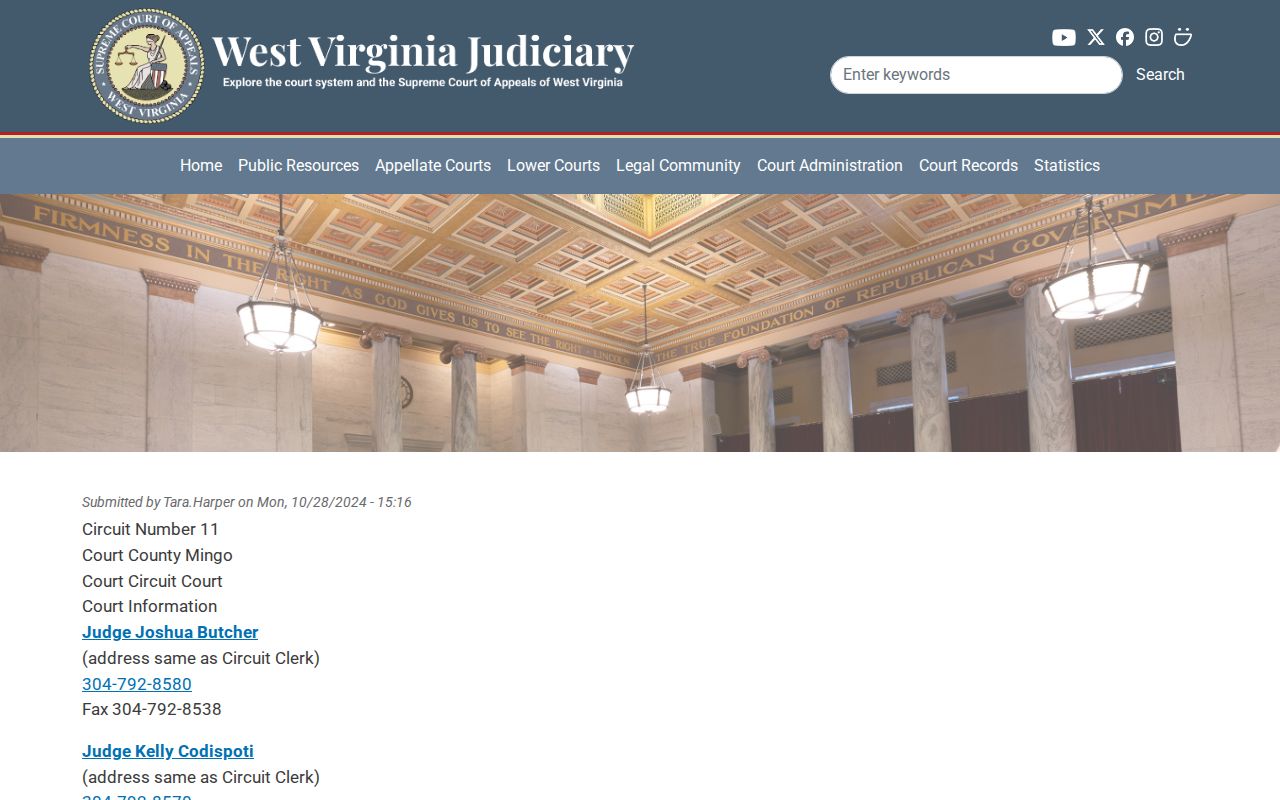
The listing routes Circuit filings, judgments, appeals, and certified-copy questions to the right counter.
Mingo County Circuit Clerk
Lonnie Hannah
78 East Second Avenue, Room 232
Williamson, WV 25661
(304) 235-0320
Mingo County Magistrate Clerk
Teresa L. Lackey
101 Logan Street, Room 303
Williamson, WV 25661
(304) 235-2445
Court Records: What They Contain
A court file ties each paper to its spot in the docket sequence. West Virginia case numbers run compact, like 21-C-11 and 18-F-46. The code hints at court type and filing order. But check its exact meaning against the record and the clerk. Public displays can hide protected data.
| Case number | The identifier used to locate the docket and file. |
|---|---|
| Caption or style | The case title and public party information. |
| Docket sheet | A date-ordered list of filings, settings, orders, and disposition events. |
| Pleadings | Complaints, petitions, answers, motions, and responses. |
| Orders and judgments | Signed rulings, outcomes, and directions entered by the court. |
| Exhibits or transcripts | Material that may require a separate request or custodian. |
One entry rarely tells the story. Read the event before it and the signed order after it. A reset is not a dismissal, and a filed motion is not a ruling; the Mingo County docket search explains the two public portals.
Mingo Family Record Boundaries
The official Mingo Family Court listing confirms the local Family Court and its courthouse contact. It also shows why Family Court forms its own docket layer. The Circuit Clerk still supplies the local record route.
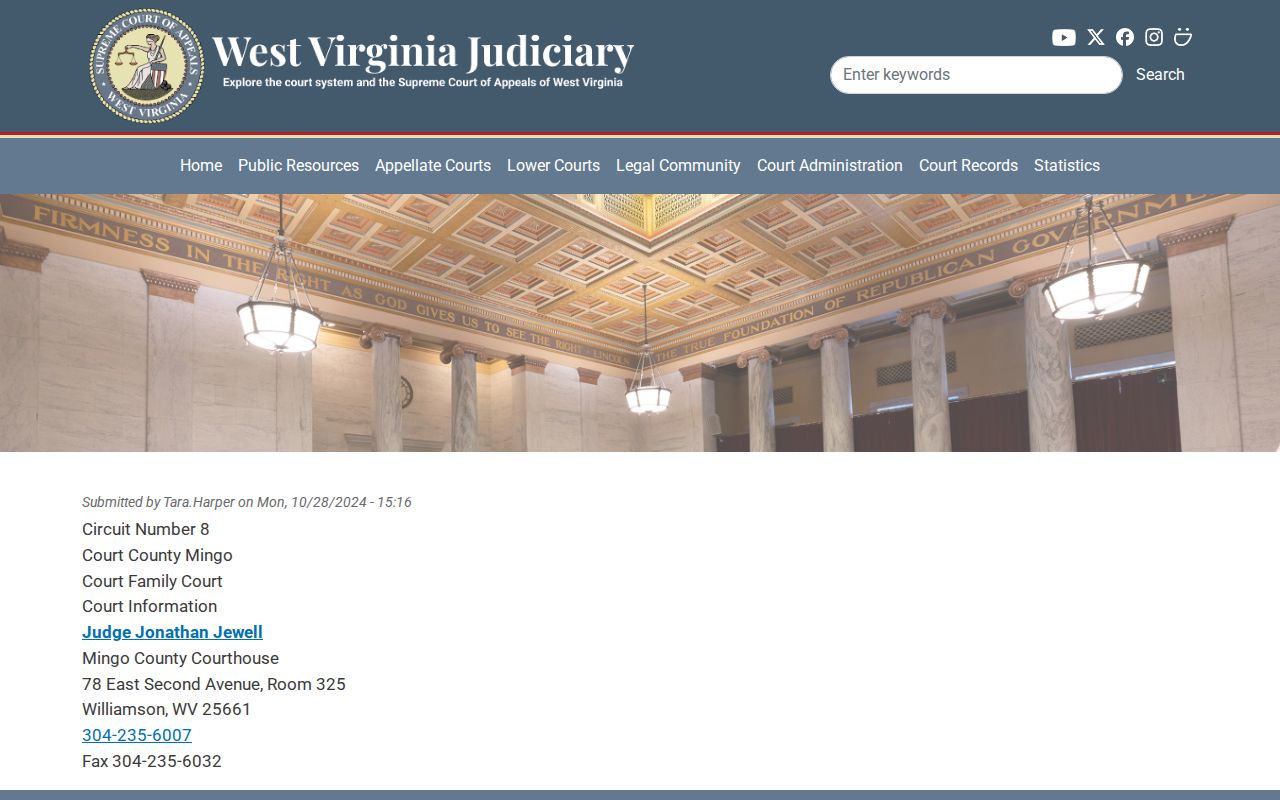
Public access here runs narrower than an ordinary civil case. Family Court Rule 6 keeps pleadings, exhibits, recordings, and transcripts confidential. Orders and indices stay public unless sealed. Parties plus other authorized people get rights the rule spells out.
Want a recording of a proceeding? Submit a written request naming the case style and hearing date, and pay the cost. The rule calls for a copy within ten days, with limits around child testimony. A transcript works differently. An independent reporter or transcription service prepares it. That cost is separate from any clerk copy fee.
Mingo Court Copy Fees
What you pay for a copy in Mingo County hinges on which court, what format, and how much certification the job calls for. A plain copy is just that. It carries no clerk seal. Before you order, ask whether your purpose needs a certified or exemplified copy. That choice changes the price and the paperwork. No single published rate covers every certified document, so the Mingo clerk who holds the court record sets the correct fee.
The Circuit Clerk fee statute lists several of the amounts. The Mingo County circuit clerk may charge them for docket copies and filings.
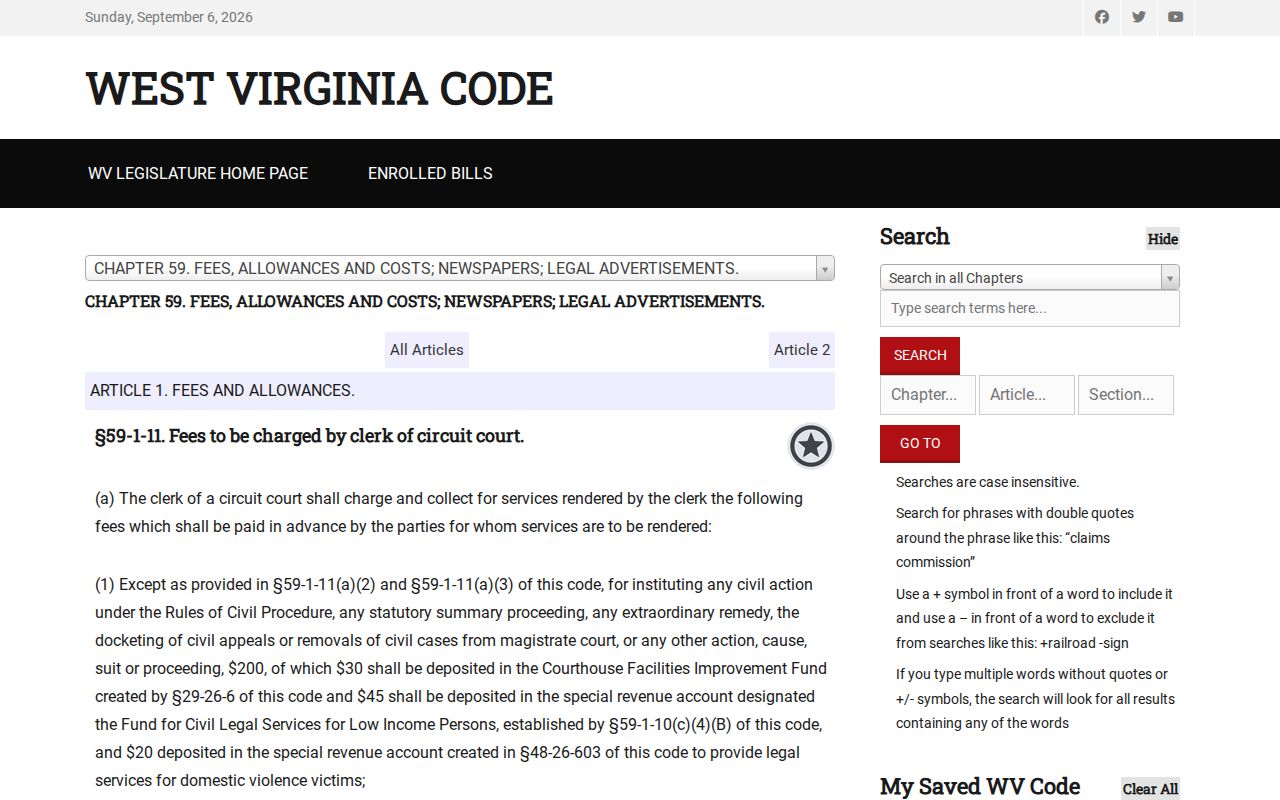
The statute backs the Circuit paper-copy and judgment-abstract amounts; court administrative rules set the Magistrate copy charge.
| Record request | Known amount or process |
|---|---|
| Circuit plain copy sent out | $1 per page under §59-1-11(b)(2) |
| Magistrate copy | $0.25 per page |
| Abstract of Circuit judgment | $5 |
| WVPASS public document | Launch notice states $0.25 per page plus nominal card fee |
| Certified or exemplified copy | Specific Mingo amount not published; ask clerk |
| Transcript | Reporter or transcription-service cost |
Mingo Court Records Went Digital
Mingo County moved its court docket into the digital era on January 30, 2022. That was when it joined CourtPLUS and West Virginia E-File. CourtPLUS runs case management for the Circuit and Family courts. Its Vault stores scanned filings. The statewide rollout wrapped up July 15, 2024. WVPASS then opened to the public on March 10, 2025 with Circuit records reaching back to 1999. MCRSearch arrived in 2024 for Magistrate case lookup, though it shows no document images.
None of this displaces the clerk. CourtPLUS serves registered filers. WVPASS is where the public searches the Mingo Circuit docket. Records predating these systems may sit in paper files, archives, or microfilm. The CourtPLUS FAQ says sealed documents stay on paper. Self-represented parties may file on paper too. An electronic order can be verified through the Judiciary's official verification tool using its reference code and e-file stamp.
Copy Fees and Certification
A written request works best when it is precise. Name the court, the full case number, the caption or party role, and the filing year. Say which entry or document you need. State whether you want a plain copy or certified copy. Note your preferred electronic or paper format too. Add contact details and a return address. If certification matters, say so up front, because the clerk has to authenticate a certified copy.
The clerk's office publishes no single mail template, email address, fax rule, drop box, ID requirement, or turnaround time for Mingo County. So call first to confirm current instructions. Ask how prepayment, postage, and archive retrieval are handled. Also ask what happens with an overpayment or short payment. Viewing a few pages in person can cut costs.
Best request: Identify one case and one record first. The clerk can quote the charge and explain whether the item is public, archived, or certified.
Access Rules for Court Records
West Virginia presumes court records are open to inspection. Court orders and subject-specific privacy rules then carve out exceptions. Redaction masks protected data inside an otherwise public file. Sealing closes a file or part of it by court order. Expungement is different again, changing how an eligible matter can be reached. None of these terms mean the same thing.
Key rules:
W. Va. Code §51-4-2 permits inspection and copies unless access is limited.
W. Va. Code §29B-1-3 requires reasonable inspection and copying opportunities.
Trial Court Rules 10.03 and 10.04 govern limited-access orders and requests to the holding clerk.
W. Va. Code §49-5-101 limits juvenile-record access.
Some material never reaches a public docket search. Family pleadings and exhibits can be withheld or masked. The same goes for juvenile files, protected domestic-violence records, sealed civil portions, and personal identifiers. A missing result proves nothing. The case may be new, old, municipal, confidential, sealed, or outside that portal entirely. Ask the right clerk whether a public index or order exists. Also ask what court authorization it takes.